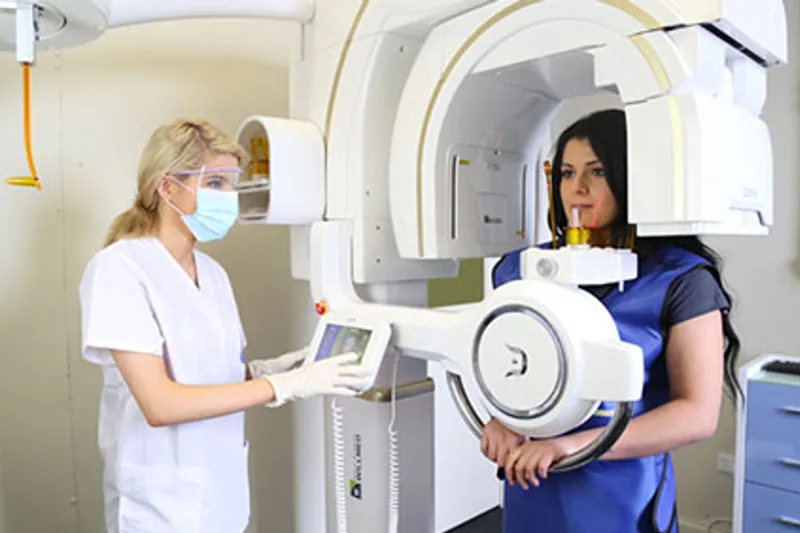
Digital X-rays at Annapolis Dental Center deliver instant on-screen images with a fraction of the radiation film needed. Patients in Annapolis get faster, safer answers, and we review the images with you, live, instead of sending you home in the dark.
Digital vs. Film: Why the Upgrade Mattered
Conventional film X-rays worked, but they needed significant exposure time and extra chemistry to develop, with all the delay and environmental overhead that implies. Digital sensors capture the image instantly with dramatically less radiation, up to about 90% less, and appear on the chairside screen within seconds.
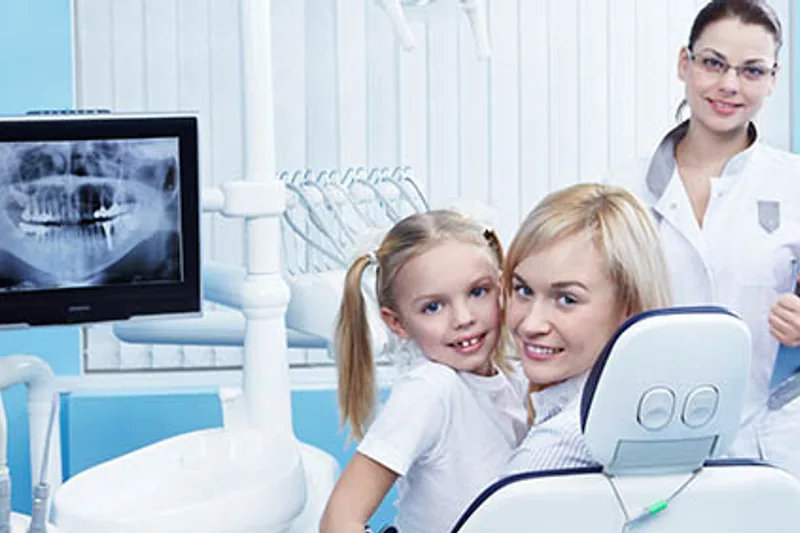
Speed changes the conversation, not just the workflow. Instead of “we will see what the films say at the next visit,” we tooth-map together on the monitor while you watch. Questions get answered in the moment, and decisions get made while you are still in the chair.
- Up to ~90% less radiation than film
- Instant on-screen images to review together
- Stable, secure digital records
- Easily shared with specialists when needed
The Imaging Experience
Seconds of imaging, immediately useful
Comfortably Placed
Rounded slim sensors fit the mouth without the sharp corners older systems had, plus a lead apron for good measure.
Quick Capture
Each exposure takes a fraction of a second. Most full sets finish in under five minutes.
Chairside Review
The image arrives beside you instantly, enhanced and annotated so what we see, you see.
Filed for the Future
Images store digitally and compare across years, so slowing trends are visible early.
Only the Images Your Mouth Actually Needs
We image by risk profile, not by habit. A low-cavity, healthy adult may need bitewings every two years. A complex case being restored or a first-visit new patient earns a fuller series. Kids get the least that answers the question. There is no universal “X-ray check in the box” here.
When wider views are called for, that is what our panoramic unit and 3D CBCT are for, each one chosen because it is the least imaging that answers the question properly.
- Imaging by risk, not by default
- Kids get the minimum useful series
- Panoramic or CBCT only when the answer needs it
- ALARA: as low as reasonably achievable, always