
A properly made porcelain crown lets a damaged or root-treated tooth serve confidently for years, and nobody has to know. In Annapolis, porcelain crowns designed by Dr. Dele deliver both the structural protection and the quiet realism a smile deserves.
What a Crown Actually Does
A crown wraps the visible part of your tooth in a strong porcelain shell, holding it together against chewing force. Without it, a large filling or crack can give way all at once, sometimes in ways that lose the tooth entirely. With it, the tooth continues on duty for years, often decades.
Every crown at our office is drawn against your own enamel maps: shade, translucency, surface character, and bite contact. Crowns are one of Dr. Dele’s focus services alongside implants, sleep apnea, and Invisalign, so they get his focused attention from margin line to final polish.
- Holds cracked or heavily filled teeth together
- Protects root canal treated teeth from fracture
- Restores worn or broken-down chewing surfaces
- Metal-free porcelain for a seamless look
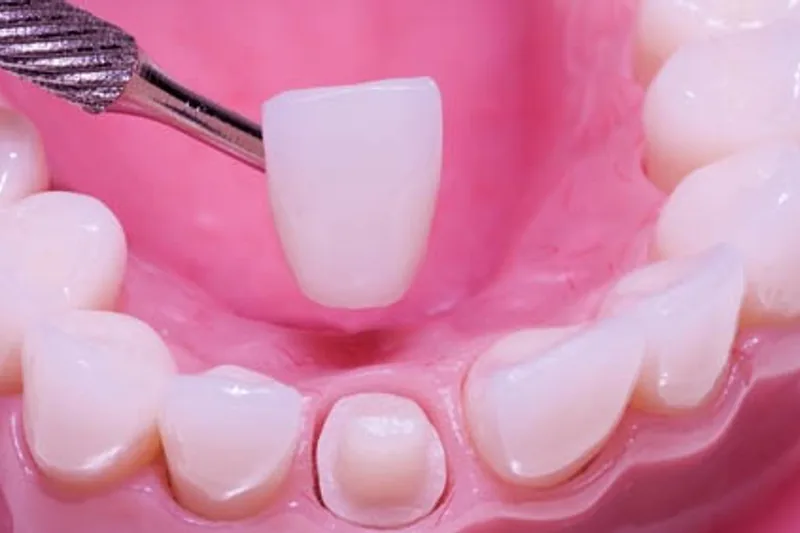
Two Visits, One Protected Tooth
How crown treatment works
Careful Preparation
We remove damaged structure and shape the tooth conservatively, then capture exact impressions while a temporary protects everything between visits.
Lab Fabrication
The lab shapes porcelain to our drawings and shade maps, building translucency and texture like the teeth beside it.
Try-In and Adjustment
Before any cement, we try the crown in, look together under good light, and tune contact and shade until it belongs.
Bonded Into Service
Once the fit is confirmed the crown is bonded, polished, and watched at every future cleaning.
Crown, Onlay, or Filling?
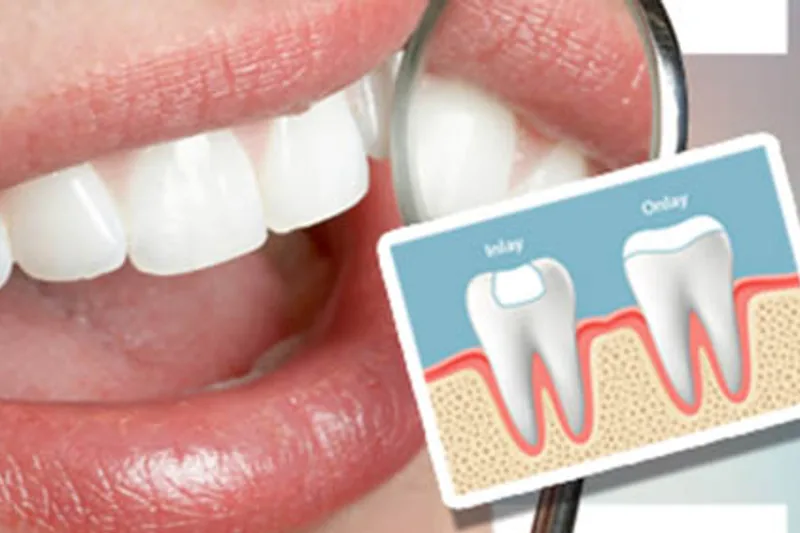
When the remaining tooth walls are strong, we lean toward the more conservative answer: a filling for small decay, an inlay or onlay when the edges are intact but the volume is large, and a crown when cusps, cracks, or root-treated enamel need real armor.
That call is a structural judgment, not a revenue one, and it is one we make with you looking at the same images we do. The point of our consults is that you leave knowing why the specific recommendation belongs to the tooth, not the schedule book.
- Filling: small, contained decay
- Inlay/Onlay: larger cavity, cusps intact
- Crown: cracks, cusp loss, root-treated teeth
- You see the reasoning on screen before you decide
Why These Crowns Look Right
Artist-Grade Design
Shade maps, texture, gloss, and translucency all considered per tooth, per face.
Modern Porcelain Systems
Durable, metal-free porcelain matched to the bite zone: front polish for front teeth, strength-tuned blends in back.
Integrates With Implants
Implant crowns are the same craft, just anchored differently. One office designs both sides.
Defended Over Time
Your crown margins get checked at every six-month visit, so small issues stay small.