
Some back teeth are too broken down for a filling but do not deserve a full crown. Porcelain inlays and onlays at Annapolis Dental Center in Annapolis are the elegant middle answer: custom-made ceramic that rebuilds strength while keeping more of your natural tooth.
The Goldilocks Restoration
A very large filling can stress and split the remaining tooth over time; a full crown is overkill in many of the same cases. Inlays and onlays split the difference with lab-crafted porcelain built from a precise model of your tooth, bonded into place so the whole unit behaves like one solid structure again.
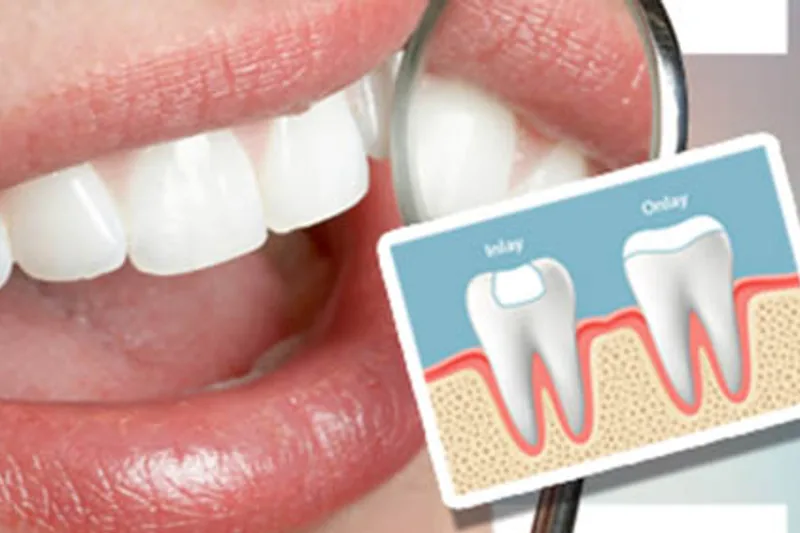
An inlay repairs damage inside the cusps; an onlay adds one or more of the cusps back over the top. Either way, the porcelain carries the load and your own healthy enamel stays where it belongs, still part of the team.
- Conserves healthy enamel and root structure
- Porcelain strength without full-tooth reduction
- Custom-milled by a trusted lab from your model
- Bonded for a stable, long-lived seal
Two Visits, One Stronger Tooth
The inlay/onlay process
Conservative Preparation
We remove the damaged or decayed structure and shape the space conservatively, keeping everything healthy that can stay.
Precise Model
A digital or mold impression captures your bite so the lab can fabricate a piece that meets neighboring teeth perfectly.
Fit and Bond
At the second visit we verify fit and shade, bond the porcelain resin with adhesive, and refine the bite.
Maintenance
Regular cleanings and exams are where we watch margins, polished smooth so plaque catches nowhere.
When We Recommend This Over a Crown
The decision is structural. A tooth whose cusps are intact but whose interior is too large for a filling is an ideal onlay case. A tooth whose cusps and nerve have both suffered probably wants a porcelain crown, and a tooth that has already been root-canal treated usually gets a crown too, no question.
We review your tooth on screen together and explain the structural reasoning either way. If you ever leave our office confused about why we recommended something, that conversation did not go far enough.
- Onlay = large coverage without crown-level reduction
- Crown = cusps, cracks, or root canal involvement
- Filling = smaller, straightforward decay
- Always: what your specific tooth structure supports
Made Well, Once
Modern Porcelain Strength
Ceramic that carries chewing forces without metal, discoloration, or early failure.
Shaded Within Your Arch
Your inlay or onlay meets the eye like the teeth beside it, because shade is mapped in context, not on a stick.
Two Decades of Judgment
Knowing when to crown and when to onlay is most of what makes these last. Dr. Dele has been making that call for 20+ years.
No Overselling
When a simple filling serves you just as well, that is what we bill you for.